

After accidentally stumbling into writing thirty years ago, one day I noticed I’d accidentally gotten okay at it, which got me wondering—was there anyone out there who might see something in my work, too? So, like every writer who’s serious about this ridiculous, and yet strangely addictive, career choice, I needed a website.
The problem? I’ve spent the last few months watching my fellow writers tie themselves in knots over this exact dilemma. Some have been ‘meaning to build a website’ for years. Others tried WordPress, got overwhelmed, and gave up. A few brave souls ventured into the world of Squarespace or Wix, only to emerge months later, frustrated and several hundred dollars poorer, with websites designed for yoga studios written in Chinese... you know who you are!
So I did what any reasonable person would do: I decided to test every bloody option myself and report back to the writing community. Because, like most writers, I enjoy self-flagellation... and wine.
The Problem With Being a Writer Online
Here’s the thing about writers and websites: we want them, we need them, but we really don’t want to need them, and we sure don’t want to need to become web developers in the process. Especially those of us who are actually web developers. We’ve got books to write, queries to send, and rejection letters to frame (kidding—we keep them in a special drawer marked ‘motivation’).
We know we need an online presence. Agents want to Google us. Readers want to find us. Publishers want extra things to ignore. People off the street want to berate us. But the gap between ‘I need a website’ and ‘I have a functioning website that isn’t for yoga classes’ is filled with technical jargon, ever-inflating subscription fees, and the kind of decision paralysis that makes choosing a Netflix show look easy.
I’ve been down this road before. Years ago, I built websites from scratch—raw HTML, back when that was a thing people did for fun. Then WordPress came along and promised to make everything easier. Spoiler alert: it didn’t. Not for writers, anyway. WordPress is brilliant if you’re a developer or have a developer friend who owes you massive favours. For the rest of us, it’s like being handed a Formula One car and a fire-retardant jumpsuit to pop down to the shops.
The Great Website Builder Hunt
Armed with my IT background (just enough coding experience to be dull at parties), I set out to find the perfect solution for my writer mates. Something simple enough for someone who still calls their laptop ‘the computer’ but professional enough to impress agents and readers—or at least not make them wince... other than at the bio pic.
First stop: WordPress. Still the gold standard, where gold is code for ‘you must be bloody joking.’ I have to what? Just to do what? Between plugins, themes, security updates and a gazillion hosting headaches, I spent more time managing the website than writing content for it. Like... A LOT. I’m pretty sure my writing friends don’t want to become that IT guy at parties—they just want to blog about how they want to find more time to write books.
Next: Wix. The ads make it look simple, and to be fair, their AI does generate a website pretty quickly. The templates are professional, the drag-and-drop editor works, and you can actually get a decent author site up and running in a few hours. The catch? $17 USD a month, jumping to $34 if you want to sell books directly. For many writers I know—especially those still building their motivation drawer—that’s a significant monthly expense.
Then I discovered Hostinger. Cheap, AI-powered, seemingly perfect. The AI builds your site fast, and at $3.99 a month, it’s budget-friendly. I was ready to sign up and recommend it until I made the mistake of checking the Reddit reviews. Let’s just say when multiple users describe walking away from their 4-year-in-advance investment (the only way to get that discounted $3.99/month price) by switching providers away from what they describe as the ‘worst customer support in history,’ that’s not exactly a ringing endorsement.
Squarespace came next—beautiful templates, premium feel, but at $16+ monthly and with a learning curve that had me questioning my life choices. Great if you’re a photographer or designer. Less great if you just want somewhere to showcase your books and blog about how much time blogging sucks out of your writing life.
The Lightbulb Moment
Here’s where I had what is called in the trade a moment of ‘not being quite such a total moron.’ I’d been approaching this all wrong. Instead of trying to force general website builders to work for authors, I needed to find a good coffee shop and blog about how much time this was all taking away from... no, hang on... oh, yeah, I needed to find a website builder built specifically for authors! There’d be one of those, right? We’re like special, right?
Luckily, yes, we are! A quick search about how special we all are... and websites and things... led me to Tertulia—a website builder designed exclusively for writers. No, I didn’t say restaurants, or yoga instructors, or brothels or everyone else who isn’t very special like us. Just us authors. Yay!
Fifteen minutes later, I had a live website.
No, not ‘fifteen minutes plus three hours of tweaking. Thanks for asking, Jeremy.’ And also no, Francine, not ‘fifteen minutes plus a call to customer support and three weeks of emails.’ Just fifteen minutes, start to finish, from signing up to having a professional author website that actually looked like it was designed for someone who blogs about not having enough time to write books.
What Actually Matters for Author Websites
Testing all these platforms taught me something important: most website builders are trying to solve every possible business need, which means they’re over-complicated for what authors actually need.
Here’s what we actually need:
About page where readers can learn about us and our work
Book showcase somewhere to display covers, descriptions, and buy links
Blog integration ideally connecting to where we actually want to write (hello, Substack)
Contact information for agents, readers, and that one person who always finds the typo you missed
Professional appearance, something that says ‘published author’ rather than ‘hobbyist blogger’
Simple maintenance because we want to write, darn it, not troubleshoot, darn it!
Even that lot is a stretch for most of us. A landing page with a holiday snap on it would be light-years ahead of what most of us have now. You can keep your million templates and your 117 different page layouts, advanced ecommerce features, ability to sell courses. Give us clean, professional, simple!
Why Tertulia Works
Tertulia gets this.
Author note: I have no affiliation with this mob. Didn’t even know they existed until this week.
The signup process is incredibly basic. A couple of questions about whether you have books to promote or just want to focus on your bio. Then it mocks up some sites, and you pick one and upload your photo and bio and book info. Job done.
The templates are clean and literary—think elegant bookshop rather than flashy marketing agency. The sections are exactly what authors need: bio section with your name and tagline, about section that doesn’t make you cringe, book showcase that doesn’t look like a shopping catalogue and blog.
Setting up my site took literally fifteen minutes because I didn’t have to fight the platform. I didn’t spend an hour trying to figure out how to make a ‘product page’ work for a book. I didn’t wrestle with widgets designed for restaurants. I just filled in the author-specific fields and got on with my life, writing blogs about not having enough... yada yada.
The cost? $9.99 USD per month. No hidden price jumps, no ‘starter rate that triples after six months,’ no locked-in contracts. Cancel anytime, no drama.
You can even get them to host your domain. I didn’t do that—because my domain is something I really want full control over. I registered my domain through Hover.com. Hover just do domains and are well priced, simple, reliable and don’t up-sell you tools you don’t need. It was a basic cut-and-paste of the domain-name-server names from Tertulia to Hover to link the domain and make the site live.
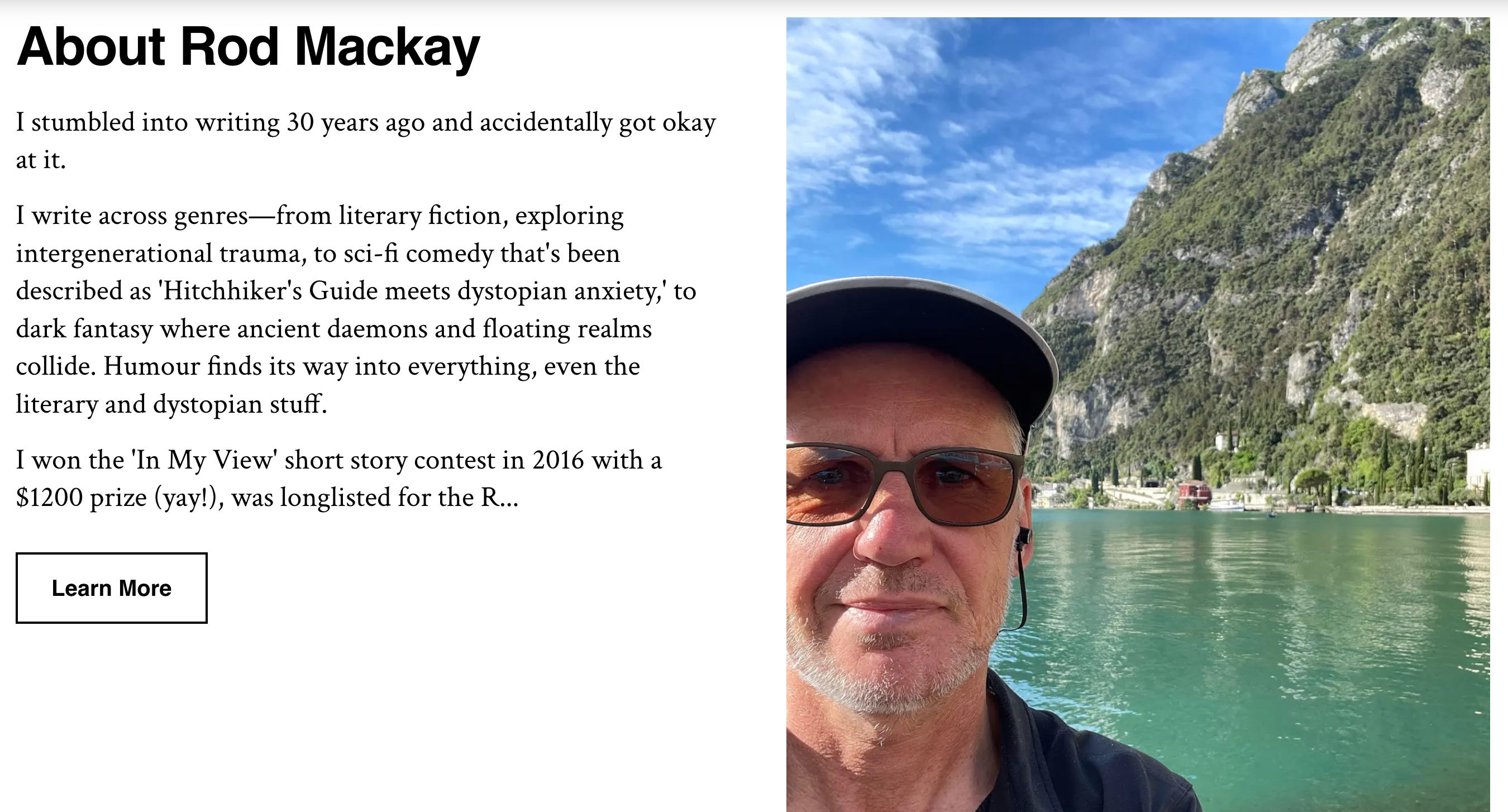
Here it is now: rodmackayauthor.com
The Bottom Line for Writers
If you’re a writer who’s been putting off building a website because the options seem overwhelming, expensive, or designed for businesses that aren’t yours, Tertulia might be worth fifteen minutes of your time. If you’re happy with your current setup, brilliant—stick with what works. You’re way ahead of most just by having something. And even wayer ahead because you’re happy with it! Yay!
But if you’re like most writers I know—someone who wants a professional online presence without becoming boring at parties along the way—stop overthinking it. Functional beats fantastic every time. After all, we’ve got blogs to write about how we don’t have enough time to write blogs about blogging about blogs about... writing books.
Related Posts
Writing an Author Bio: How to write a half-decent Author bio—even if you’re not a nobel-prize-winning author who has visited the international space station… twice—and even have fun doing it.
Criticality of Author Websites: Your website might matter even more than your next latte!
And How’s Arthur?
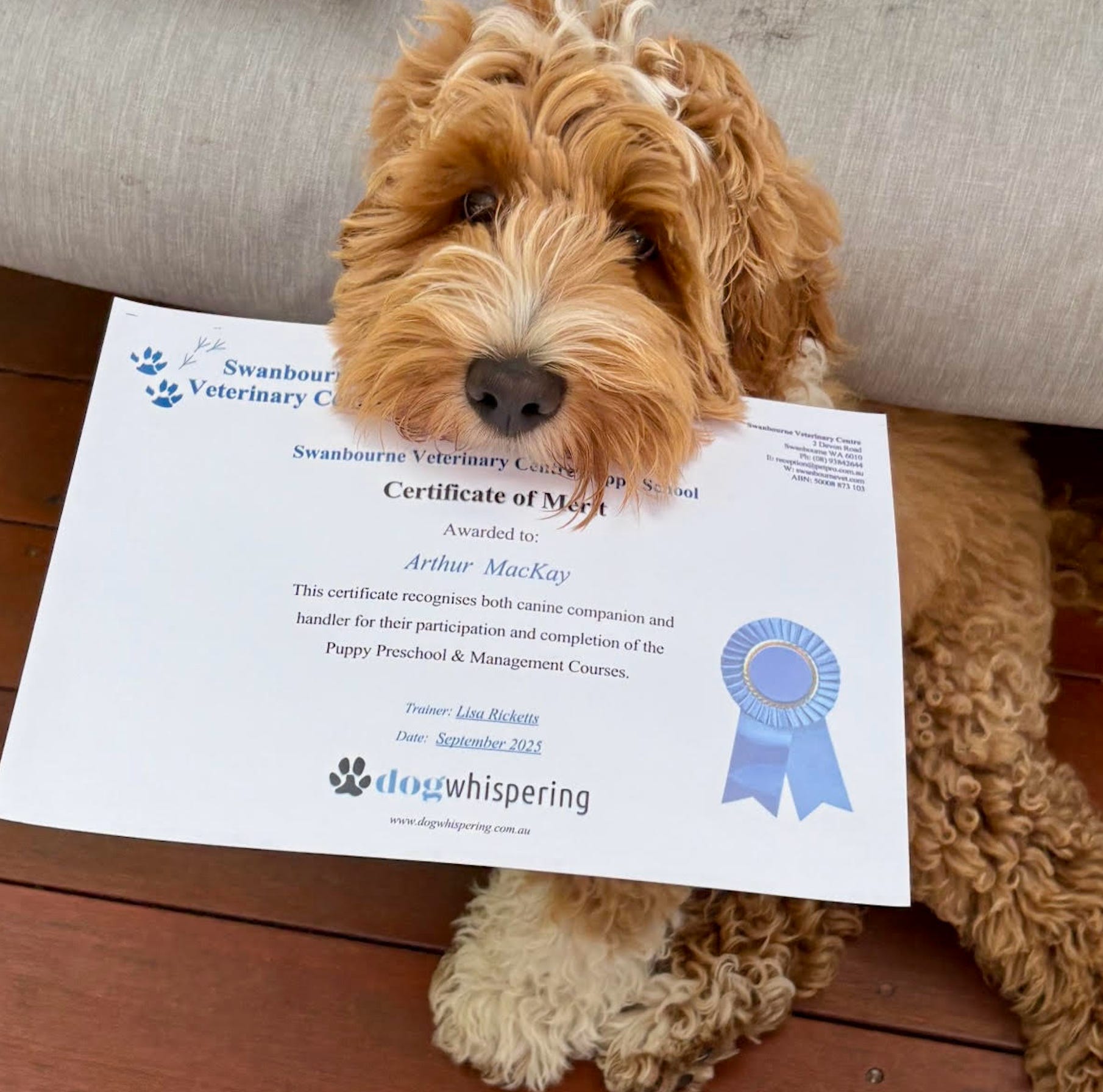
Arthur is going well, thanks for asking! He just graduated from puppy school. They grow up too fast!
So professional, fun and not intimidating! The familiar tone is encouraging –dispelling fear! Fantastic Rod – thanks for the instruction and motivation.